



Marie Colvin wasn’t saintly. She wasn’t subordinate. She wasn’t a mother. She wasn’t any of the automatic stereotypical roles into which our society likes to lump its females. She was a fierce, talented journalist who inserted herself into the most deadly, brutal conflicts in the world, describing what was truly happening in human terms for people who would never go near such places. In the film, she says, “I see it so you don’t have to.” She interviewed rebel leaders and dictators, evaded shelling, located mass graves, reported rapes and murders, and did what she could to reveal the raw facts while she tried to help the victims. She thought the world should care, so she walked through harm’s way with a notebook and a laptop instead of an assault rifle. She called in her report from a hospital bed after she was blinded in one eye by shelling in Sri Lanka. Thereafter, she wore an eye patch, but she kept going.
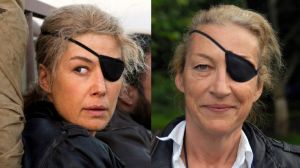


When Bashar Assad of Syria insisted he avoided killing civilians with his shelling, Marie Colvin used her laptop to go live on CNN from a residential area being bombed, showing as she was telling the world that Assad was lying. He was targeting civilians—including children. And, as it turned out, reporters. Marie Colvin was killed.
Last week, I heard someone say Elizabeth Warren could be off-putting and Amy Klobuchar seems bitchy. Many want to ensure that women stay in what the naysayers want to believe is their place. The latent courage of women is a given. Remember Harriet Tubman? Mother Jones? Who hasn’t known a woman who was the strength of a family or a cause? Regardless of your preferences in the upcoming election, you’re lying to yourself if you’re still telling yourself women can’t make decisions and need to be sheltered. When females weren’t given the same physical strength as males, they were given stamina, increased potential for empathy, adaptability, and the ability to build coalitions. Marie Colvin showed us what moral responsibility can look like on a woman. She wore it well.
